
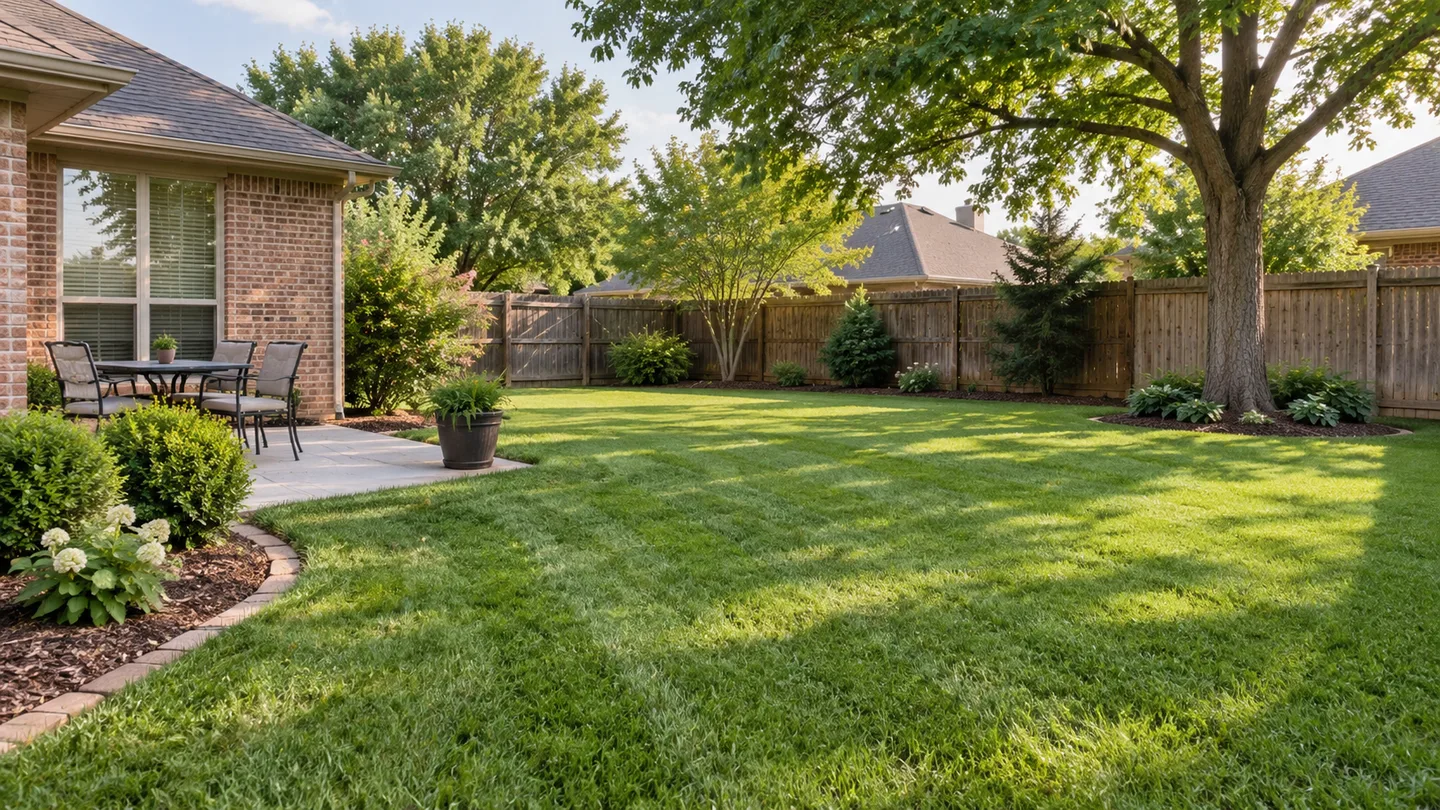
A useful seasonal plan connects the lawn, landscape beds and the way you use the property. It also leaves room for changing conditions. Use the seasons below as planning checkpoints, then confirm the actual work and timing for your grass, plants and site.
Key takeaway
Identify your lawn and plants first. Use local guidance to plan the season, then adjust the work to actual growth and conditions.Know what is growing before choosing a schedule
Bermudagrass and zoysiagrass are warm-season grasses; fescue is a cool-season grass. OSU Extension’s landscape schedule treats them differently, including the timing of establishment and fertilization. One calendar should not be applied automatically to every lawn.
Make a simple record of your turf areas, sunny and shaded spaces, beds and irrigation zones. Note recurring problems and take dated photos from the same spot. When you discuss service, those observations are more useful than asking for every treatment on a generic list.
Spring: inspect, clean up and prepare
Walk the property after winter. Make a list of accumulated debris, damaged plants, bed edges that need attention and areas where the lawn has thinned. Separate cleanup from repair work so you can agree on priorities and a budget.
Before asking for fertilizer, ask whether a soil test would help guide the plan. OSU recommends basing fertilizer decisions on soil testing. Its schedule also distinguishes spring-flowering shrubs from other pruning work, so confirm the plant before approving a cutback.
Use the site walk to decide what appearance you want at entrances and outdoor gathering areas. Give the contractor a clear list of concerns, along with any dates when the property needs to be ready for an event.
Summer: watch the lawn, not just the calendar
OSU’s lawn guidance ties mowing frequency to growth and recommends removing no more than about one-third of the leaf at a time. It also advises watering in response to need, allowing water to soak in rather than run off, and favoring early morning irrigation. Adjustments depend on the site and lawn type.
Record areas that repeatedly look dry, hold water or grow differently from the rest of the lawn. Check whether the pattern lines up with shade, traffic or an irrigation zone. Share those observations before adding a treatment or changing the schedule.
Ask your provider what you should monitor between visits and how to report a developing problem. On a commercial property, include the location on a site map so the right area can be checked without a lengthy exchange.
Fall: plan improvements and the next season
OSU identifies fall as the preferred season for establishing cool-season turf. That does not make fall the right seeding window for every Oklahoma lawn. Identify the grass and discuss the preparation, timing and follow-up care before scheduling a project.
Review what worked during the growing season. List areas that need repair, changes you want in landscape beds, and cleanup needs as leaves accumulate. Decide which tasks belong in routine maintenance and which need a separate estimate.
If holiday lighting or winter service is part of your property plan, discuss it before it competes with year-end events and other site work. Confirm the scope, access and schedule with the team rather than assuming a maintenance agreement includes it.
Winter: review the property and plan ahead
Use the quieter part of the maintenance year to review your service scope, budget and property priorities. Keep a list of changes for spring: bed improvements, recurring lawn issues, areas added to the property, or a new event schedule.
A dormant lawn does not mean every plant needs the same care. OSU’s winter checklist includes checking moisture for trees and shrubs when precipitation has been insufficient. Confirm actual conditions before changing irrigation.
Brian’s Lawn Care offers lawn, landscape and seasonal services across the OKC metro. Share the property address, the season you are planning for and the concerns you want addressed; the next conversation can focus on work that fits your site.
Keep this checklist
Keep a simple seasonal property record
- Grass type, landscape plants and irrigation zones
- Dated photos of recurring concerns
- Cleanup, repair and improvement priorities
- Event dates and property access details
- Questions about timing, preparation and follow-up care
Sources & further reading
Official references for the technical guidance in this article. The planning checklists help you prepare for a property-specific service discussion.
- Oklahoma State University ExtensionLandscape Maintenance Schedule
- Oklahoma State University ExtensionLawn Management in Oklahoma
Put the plan to work
Let’s talk about your property.
Tell the team where the property is and what you would like to improve.
Plan care for your propertyOr call (405) 942-3129