
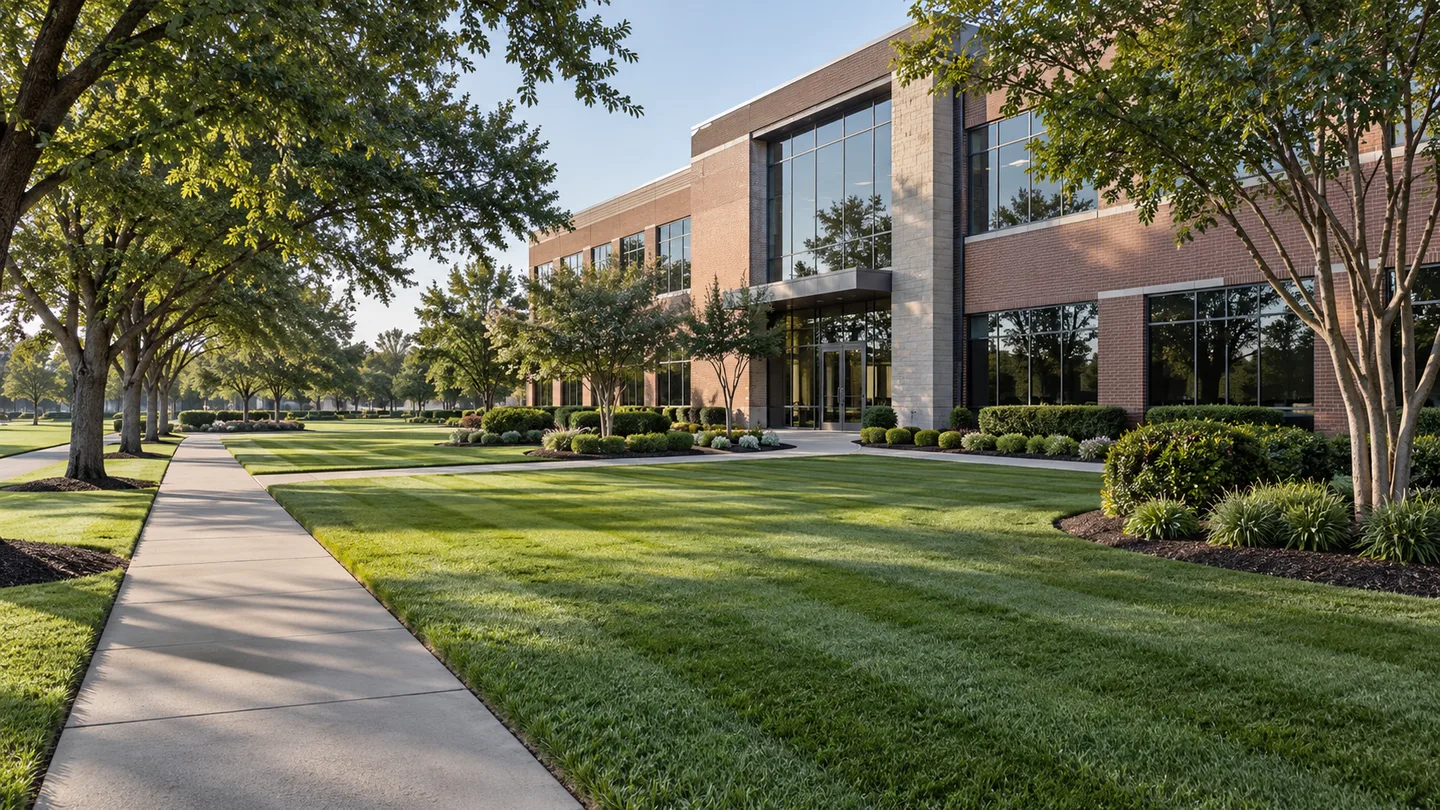
A maintenance plan should tell you what will be cared for, when it will be done, and who to contact when the property needs attention. Start with the site itself. An office entrance, a retail parking island, and the grounds around a medical center have different demands—even when each needs mowing and landscaping.
Key takeaway
Agree on the property boundaries, service scope, seasonal work and communication process before comparing a monthly price.Start with a property walk
Walk the site with a map or aerial image. Mark the areas the contractor will maintain, including frontage, beds, parking islands, shared boundaries and outlying turf. Identify anything managed by a landlord, tenant or another vendor. A boundary that seems obvious on site may be much less clear in a written estimate.
Then describe how the property operates. Include opening hours, delivery routes, locked gates, irrigation access and scheduled events. At an office, bank or church, the arrival area may be the first priority. At a healthcare property, coordinate work around the routes patients and staff use. Give the contractor that context rather than assuming every site should receive the same schedule.
Separate recurring care from larger work
A useful scope distinguishes the routine visit from work that needs its own schedule or approval. “Full service” is too broad to compare by itself. Ask for the actual tasks, areas and frequency in writing.
- Routine grounds careDefine mowing, edging, trimming, cleanup of cuttings from hard surfaces, and bed attention. Specify which areas are included.
- Landscape maintenanceIdentify shrubs and beds, desired appearance, pruning expectations, mulch work and removal of accumulated debris.
- Seasonal or additional workList leaf cleanup, turf improvements, planting changes, storm debris and winter services separately. Clarify which are included and which require an estimate.
Use a calendar that can respond to the property
Set a planned visit schedule, then ask how it changes when weather or growing conditions interrupt work. Agree on how a delayed visit is communicated and rescheduled. A calendar is a coordination tool; it should not leave either party guessing after a rainy week.
For treatments, seeding or turf repair, ask the contractor to identify the lawn type and explain the timing before the work is authorized. A property with several turf areas may need more than one approach. Record these decisions alongside the recurring schedule so they do not become last-minute requests.
Make communication part of the scope
Name one property contact and one contractor contact. Decide how concerns are reported, who can authorize extra work, and what information you need after a visit. If your organization requires service notes or photos, ask whether they can be provided and put that expectation in the agreement.
Use a short list of recurring concerns for site reviews: missed edges, bed condition, debris, damage and work outside the agreed area. Describe the location and the desired correction. This gives both parties something specific to resolve instead of a general complaint about appearance.
Plan the budget in two parts
Keep recurring maintenance and planned improvements visible as separate budget items. Ask what the routine price covers, how seasonal work is priced, and what would trigger an additional charge. This helps you compare proposals and decide whether a planting refresh or turf repair should happen now or later.
Brian’s Lawn Care has commercial experience across the OKC metro, including oil and gas companies, retail, offices, banks, healthcare properties and churches. To request a site-specific scope, share the address, property type and services you need. A property discussion can then focus on the work rather than a generic package.
Keep this checklist
Bring these details to a site discussion
- Property address and maintenance boundaries
- Opening hours, access restrictions and priority areas
- Current concerns and the services you want included
- Seasonal work, budget timing and approval contact
- Your preferred start date and communication process
Put the plan to work
Let’s talk about your property.
Share your property address and priorities so the team can discuss the right scope.
Request a commercial estimateOr call (405) 942-3129